
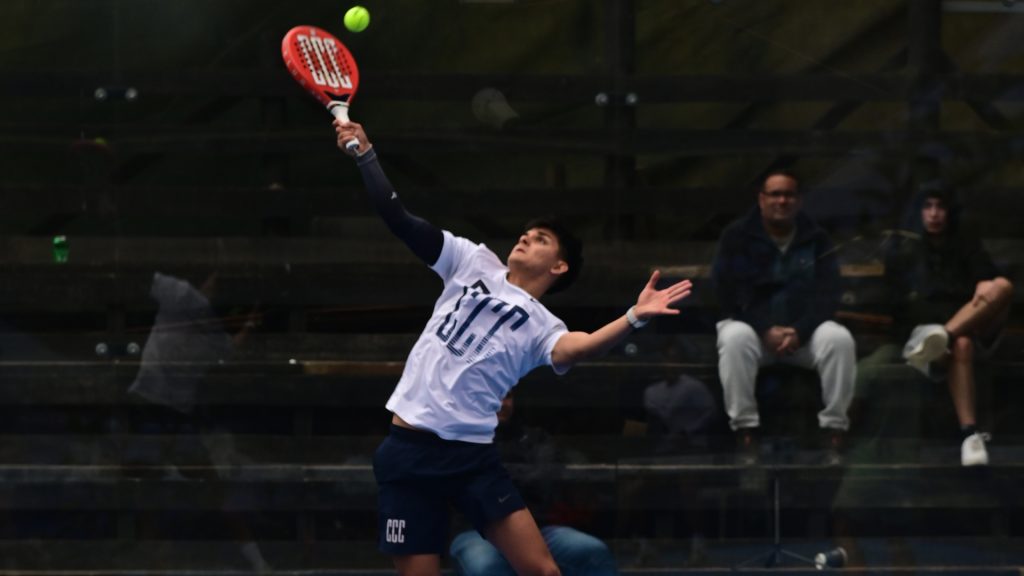
The Continental Grip Explained
Summary
Master the one grip that works for 90% of padel shots
Introduction

The Continental grip is often regarded as the cornerstone for mastering padel, providing players with a fluid and versatile way to execute various shots. Unlike tennis, where players may use multiple grips depending on the specific shot, padel predominantly relies on the Continental grip for about 90% of its shots. This gripping technique not only enhances shot versatility but also maintains consistent control and precision. As a beginner, understanding and mastering this grip will pave the way for your success on the court.
Understanding the Continental Grip
The Continental grip may seem straightforward, but adequate understanding and correct application are vital for effective gameplay. Let’s dissect this grip to comprehend its nuances, why it works effectively in padel, and its impact on various shots.
How to Find the Continental Grip
Finding the Continental grip involves a few simple yet essential steps. Mastering the grip will provide you with a solid foundation for your shot-making in padel. Here's how to locate it:
- Hold the racket like a hammer: Begin by gripping the racket in a way that mimics holding a hammer. Your fingers should be wrapped around the handle, while the base of your palm should touch the racket’s butt cap.
- Locate the 'V': Place the 'V' shape formed by your thumb and index finger at the top edge of the racket’s grip. This "V" should be directly aligned with the strings of the racket.
- Position your palm: Allow your palm to rest naturally on the flat side of the racket, ensuring there is a comfortable fit that does not lead to excessive tension.
As a visual aid, think of the Continental grip as similar to how one would hold a door handle. The thumb is a stabilizer while the fingers provide grip and mobility.
Why Continental Works
The Continental grip is effective for a multitude of reasons. Here are several key advantages it offers during gameplay:
- Versatility: This grip is suitable for various strokes, including volleys, serves, and defensive shots like the bandeja and vibora. By using one grip, players can transition seamlessly between different shots.
- Control: The grip allows for precise angle control. When holding the racket within the Continental range, players can easily manipulate the direction of their shots—whether they want to hit cross-court or down the line.
- Power Distribution: It provides an optimal angle between the racket face and the ball, enabling maximum power with minimal swing effort. This is particularly beneficial when executing powerful serves or overheads.
- Players’ Comfort: The grip feels comfortable because it doesn’t demand frequent adjustments unlike a grip that changes with different shots. This comfort leads to improved confidence in shot execution.
World-renowned players such as Paquito Navarro and Alejandra Salazar have effectively utilized the Continental grip to achieve success at the highest levels of the game. Their ability to produce spin and control while maintaining a single grip demonstrates its effectiveness.
Mastering Key Shots with the Continental Grip
Understanding how to use the Continental grip effectively across different types of shots will greatly elevate your performance on the court. Below, we’ll explore how to execute specific shots using the Continental grip.
1. The Serve
The serve in padel is crucial as it initiates a point. Using the Continental grip for serving allows for an array of shots from flat to slice serves. Here’s how to execute a serve effectively:
- Stand with your feet shoulder-width apart, adopting a slight knee bend.
- Hold the racket in the Continental grip with one hand while placing the other hand on the ball.
- As you toss the ball into the air (about head height), begin by pointing the racket tip upward.
- Then, tilt your body slightly and move the racket down and back, gathering momentum as you step forward into the shot.
- Contact the ball at the highest point, using the power of your legs and core for added strength.
- Follow through naturally, allowing your racket to finish high, ideally across your body.
This combination of power and angle provided by the Continental grip enhances your serve’s effectiveness.
2. The Volley
The volley is another essential shot where the Continental grip shines. It allows players to take quick reactions at the net. Here’s how to master it:
- Position yourself close to the net with your feet ready.
- Use the Continental grip and hold the racket slightly in front of you.
- Focus on keeping your racket face slightly open or flat depending on the incoming ball’s height.
- As the ball approaches, step forward with your leading foot, using minimal backswing to maintain control.
- Make contact with the ball directly in front of your body, utilizing a short, punching motion to direct it back to your opponent.
In executing a volley, remember that anticipation and quick footwork are key, aligned with the versatile angle of the Continental grip.
3. The Bandeja
The bandeja is a defensive shot commonly used when players find themselves in an awkward position. The Continental grip is perfect for executing this shot due to its maneuverability:
- Position your body sideways to the net, with your non-dominant shoulder facing the direction of the ball.
- Hold the racket with a Continental grip and bring it back slightly while bending your knees.
- As you make contact, slice under the ball while lifting the racket upward, creating an arching trajectory.
- Follow through gently; allow the racket to finish high, guiding the ball back to the opponent’s side.
The bandeja not only defends but can create offensive opportunities by maintaining control of the net.
4. The Vibora
The vibora shot is a spin-heavy approach shot typically used to add pressure to your opponent. Utilizing the Continental grip grants you the ability to impart this spin effectively:
- Start by positioning yourself sideways, preparing for a shot from your opponent that you can capitalize on.
- Hold the racket in a Continental grip and begin your swing from low to high.
- As you approach the ball, brush the side of it, adding spin while following through aggressively.
- Ensure your wrist is loose to enhance the spin effect without sacrificing accuracy.
The vibora can be a game-changer in pressuring your opponent into a less favorable position.
Common Mistakes with the Continental Grip
Even with an excellent understanding of grip technique, players often face issues during implementation. Here are some common mistakes to avoid:
- Gripping too tight: Many beginners grip the racket too tightly. This excessive tension can hinder mobility and reaction time. Aim for a grip pressure of around 4 out of 10, wherein you can maintain control while allowing your wrist to be flexible.
- Rotating to an Eastern forehand grip: Sometimes, players unknowingly transition to an Eastern forehand grip when preparing for shots, limiting their options. Always try to remain in the Continental grip focus for all strokes.
- Excessive backspin on volleys: While some backspin is useful in rallies, too much can make volleys ineffective. Maintain a neutral grip and focus on a controlled follow-through.
Pro Tips for Mastering the Continental Grip
Mastering the Continental grip requires consistent practice and mindful adjustment. Here are some pro tips to enhance your technique:
- Practice with Shadow Drills: Without hitting the ball, practice your grip and strokes with shadow swings to develop muscle memory.
- Focus on Relaxed Wrist Movement: Including wrist relaxation when practicing shots helps with spin and control. You want your wrist to feel fluid rather than stiff.
- Analyze Pro Players: Observe professional players known for their excellent usage of the Continental grip, such as Juan Lebrón or Gemma Triay. Study the way they grip, their footwork, and their overall technique.
- Record Yourself: Recording your shots can help identify areas for improvement in grip and shot execution. Analyze your performance critically to better understand body movement and wrist orientation.
Practice Drills
Regular practice is crucial to reinforce your skills with the Continental grip. Below you’ll find tailored drills with specific repetitions and timing to enhance your overall technique:
Drill 1: Grip Switching Drill
Objective: Transition between shots smoothly while maintaining the Continental grip.
- Participants: 2 players.
- Duration: 10 minutes.
- Both players position themselves across from each other.
- Player A serves the ball using the Continental grip.
- Player B returns using the same grip.
- After 5 exchanges, switch roles and repeat.
Drill 2: Volley Control Drill
Objective: Improve control and precision with volleys while engaged with the Continental grip.
- Participants: 2 players.
- Duration: 15 minutes.
- Position one player at the net and the other at the baseline.
- The baseline player lobs the ball over, while the net player practices volleys, focusing on maintaining the grip and position.
- Perform 3 rounds of 10 volleys each, switching positions after each round.
Drill 3: Bandeja to Vibora Drill
Objective: Master both the bandeja and vibora while maintaining grip and body coordination.
- Participants: 2 players.
- Duration: 20 minutes.
- Player A serves; Player B performs a bandeja.
- After Player A returns, Player B switches to vibora, targeting Player A’s deeper corners.
- Repeat 10 times each, emphasizing grip and follow-through.
Summary
Mastering the Continental grip is foundational to your development as a padel player. This single grip can enable you to execute a variety of shots with precision and fluidity, making it indispensable on the court. By understanding how to locate the grip, its applications, and the common mistakes to avoid, you will significantly improve your game. Practice regularly with the drills provided, ensuring you stay relaxed and focused on maintaining proper technique. With dedication and persistence, you’ll find the Continental grip serving as a powerful ally in your pursuit of success in padel.
My Notes
No notes yet