
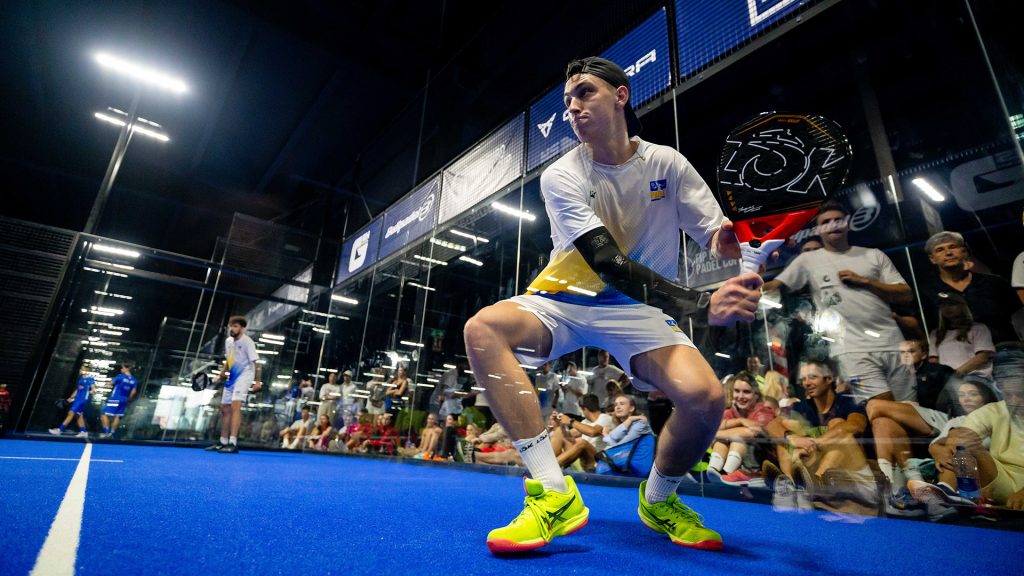
The Bandeja: Overhead Control Shot
Summary
The essential overhead that separates intermediate from beginner
Introduction
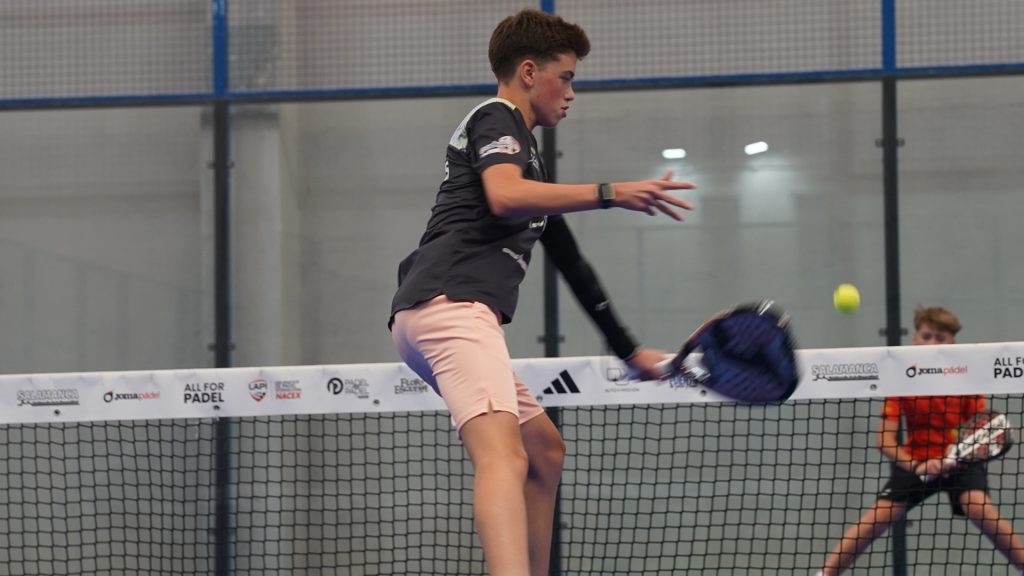
The bandeja, a crucial overhead shot in padel, is the defining element that distinguishes intermediate players from beginners. While many players quickly gravitate toward the power-packed smash, it is the finesse of the bandeja that offers consistent pressure on opponents. Mastering this technique allows players to maintain their position at the net while keeping the ball low and offering strategic placement rather than brute force. In this comprehensive lesson, we will delve into the mechanics of the bandeja, its strategic importance, common mistakes players make, and practical drills to enhance your execution of this essential shot.
The Importance of the Bandeja
Understanding why the bandeja is favored over the smash is vital for any serious padel player. The key aspects include:
- Controlled Shot: The bandeja provides a level of control that the smash does not. It allows players to dictate the pace of the rally and keep the ball in-play while maintaining offensive pressure.
- Ball Trajectory: Unlike a slam that usually sends the ball high, the bandeja aims to keep the ball low. This lower trajectory makes it more challenging for your opponents to attack, especially when you place it well.
- Maintaining Net Position: The bandeja facilitates a forward, aggressive position at the net, allowing players to volley the next shot effectively. This ability to stay near the net is crucial in padel, as it enhances your chances for winning points.
- Fatigue Management: Using the bandeja instead of a smash helps in conserving energy over long games. The more controlled, less strenuous swing can be a game-changer in intense matches.
Technique Behind the Bandeja
To execute the bandeja effectively, players must grasp the underlying mechanics thoroughly. Here are the essential steps for a precise execution:
1. Preparatory Stance
Before you initiate the bandeja movement, your stance is crucial. Begin by:
- Turning your body sideways to the net, this orientation sets you up for better balance and positioning.
- Positioning your knees slightly bent to maintain a low center of gravity, enhancing stability.
- Adjusting your feet shoulder-width apart for optimal balance and readiness for lateral movement.
2. Racket Positioning
Your racket's position is key for generating the desired spin and control. Follow these steps:
- Hold your racket with a continental grip, widely used for overhead shots, allowing for versatile wrist movement.
- Place the racket behind your head—this is vital to prepare for the necessary slice. The angle of the racket face should be pointed slightly upwards.
- Simultaneously, your non-dominant arm should point towards the ball, leading your body into the shot.
- Keep your elbow relaxed but slightly elevated to facilitate a smooth, controlled swing.
3. The Slice Technique
The technique of applying slice is foundational for executing a bandeja. Here’s how to achieve it:
- As the ball approaches, focus on making contact underneath it. This positioning is essential for generating backspin and controlling the ball’s trajectory.
- When contacting the ball, aim for your racket to brush against the underside, creating the necessary backspin which causes the ball to dip quickly after crossing the net.
- Keep your eyes on the ball until the moment of contact to ensure precision and timing.
- Maintain a soft yet firm grip, allowing your wrist to adjust through the impact to control the spin.
4. The Follow-Through
Your follow-through is vital for directing the ball where you intend and mitigating injury risks. Consider these points:
- After contact, continue your swing across your body, leading with the elbow and finishing with the racket pointing towards your target area. This motion enhances placement and keeps your momentum directed forward.
- Ensure that your balance remains low, as this will allow for quicker recovery for the next shot.
- The follow-through should feel natural and fluid, avoiding any jerky motions that could compromise accuracy.
Common Mistakes in Executing the Bandeja
Even intermediate players may find themselves falling into common traps when performing the bandeja. Awareness of these mistakes will aid in avoiding them:
- Overemphasis on Power: Focusing too much on hitting the ball hard often leads to a less controlled shot. Remember, placement takes priority over power.
- Improper Contact Point: Hitting the ball too low or too high can lead to floaters or overly aggressive shots. Target the area just above waist height for optimal control.
- Lack of Follow-Through: Neglecting the follow-through can result in erratic shot placement. Always ensure the racket continues through the desired target area.
- Staying Upright: An upright position while hitting can weaken your shot and make you vulnerable to counter-attacks. Keep a low stance for better control and stability.
- Poor Footwork: Not getting into the right position in time can lead to off-balance shots. Swift and precise movement to the ball is crucial.
Pro Tips for Mastering the Bandeja
To further enhance your bandeja, consider these professional tips, commonly shared among advanced players:
- Focus on Footwork: Good footwork is crucial in reaching the optimal position for executing a bandeja. Practice stepping into the shot while maintaining balance.
- Use Target Drills: Incorporate cones or targets on the court to practice your placement. Develop your ability to hit specific areas consistently.
- Replicate Match Conditions: When practicing the bandeja, simulate your opponent's shots to adapt more dynamically during games.
- Heightened Awareness: Learn to read your opponent’s position and the trajectory of the incoming ball to time your bandeja effectively.
- Pause and Visualize: Before playing, take a moment to visualize successful bandejas in match-like situations to mentally prepare yourself.
Advanced Techniques to Elevate Your Bandeja
For players looking to push their bandeja skills further, mastering these advanced techniques can provide an edge over opponents:
Use of Angle
Implementing angle into your bandeja can dramatically increase its effectiveness:
- Cross-Court Placement: Use angles to send the ball cross-court, making it harder for opponents to return with accuracy.
- Sharp Angles: Try creating sharper angles against opponents to open up gaps in their defense; this often forces rushed returns.
Varying Spin and Speed
Experiment with the speed and spin of your bandeja to keep opponents guessing:
- Change of Pace: Mix quicker bandejas with slower ones to disrupt your opponent's rhythm.
- Experiment with Slices: Use more or less slice depending on the ball's situation and your opponent's weaknesses.
Practice Drills to Enhance Your Bandeja
Systematic practice is key to incorporating the bandeja into your game. Below are specific drills designed to enhance your technique and improve overall effectiveness:
Drill 1: Bandeja Placement
Objective: Focus on hitting the bandeja in targeted sections of the court.
- Setup: Place cones at the service box corners.
- Execution: Stand at the net and have a partner feed high balls to you. Execute 10 attempts for each cone, ensuring you hit them accurately.
- Rest: Take a 1-minute break after each set of attempts.
Drill 2: Reactive Bandeja
Objective: Develop reaction time and adaptability.
- Setup: Another player stands behind the baseline and feeds you varied balls to simulate an opponent’s overhead.
- Execution: You will have 30 seconds to react and perform a bandeja for every high ball that comes your way. Aim for at least 20 successful hits.
- Rest: Rest for 2 minutes before progressing to the next drill.
Drill 3: Side-to-Side Bandeja
Objective: Improve lateral movement and balance.
- Setup: Use two cones placed at an appropriate distance on each side of the net.
- Execution: Begin at the center of the court, move laterally to a cone when a partner feeds a ball, executing a bandeja every time while focusing on placement.
- Duration: Continue for 5 minutes, switching sides every minute.
Drill 4: Dynamic Defense to Offense
Objective: Transition smoothly from a defensive position to executing an offensive bandeja.
- Setup: Partner stands at the net and feeds balls aimed at your baseline.
- Execution: Start at the baseline, defend one ball, and then move forward to hit an aggressive bandeja, focusing on controlling the depth and placement.
- Variation: Change starting positions to work on different defensive scenarios leading to a bandeja.
- Repeat: Perform 10 sets of these scenarios with periods of active rest.
Drill 5: Precision and Spin
Objective: Enhance precision and master the spins.
- Setup: Place small targets on both service lines.
- Execution: Focus on hitting with exact spins and to the specific targets, alternating sides on each attempt.
- Intensity: For added challenge, keep changing the targets every few attempts to adapt shots continuously.
Summary
The bandeja is more than just an overhead shot; it's widely recognized as a crucial skill that can elevate your padel game significantly. Its strategic advantages, combined with the intricacies of its technique, offer an opportunity to outsmart opponents rather than overpower them. By focusing on the proper execution, avoiding common mistakes, and incorporating dedicated practice drills, you'll enhance your ability to control the game from the net. Remember, the bandeja is a controlled shot that requires precision, practice, and placement. As you continue to master this essential technique, watch how it not only transforms your performance but also elevates your overall enjoyment of the game. In the end, it’s about playing smarter, not harder, and the bandeja allows you to do just that while keeping the thrill of competitive padel alive.
My Notes
No notes yet