
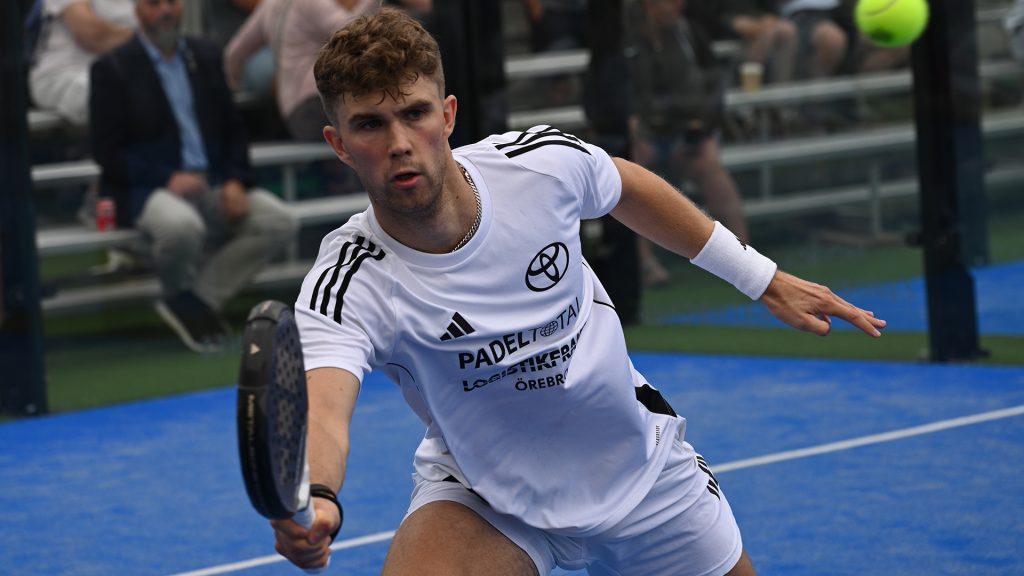
Ball Out of Court: Salida de Pista
Summary
Play balls that bounce over the back wall — outside the court
Ball Out of Court: Salida de Pista

Introduction
Paddle tennis, or padel, has evolved into a dynamic and thrilling sport, where players often showcase incredible athletic abilities and strategic insights. Among its many intricacies, one of the most electrifying maneuvers is the "salida de pista," which translates to "exit of the court." This play involves hitting the ball over the back wall, thereby creating a captivating moment that fans and players alike appreciate. While it may seem a rare occurrence, mastering this technique can elevate your game dramatically, making you a formidable opponent on the court.
In this lesson, we will delve into the technical aspects of executing a salida de pista, focusing on its significance, mechanics, strategy, and various practice drills. We aim to help you not only understand the functionality of this technique but also how to apply it effectively during matches, finding success at the highest levels of play.
Key Concepts
1. Understanding the Salida de Pista
The salida de pista is one of those unique aspects of padel that sets it apart from other racquet sports. While players often aim to keep the ball in play, the rules allow for exciting plays where the ball can bounce outside the court boundaries, specifically over the back wall. This section will explore the critical elements that define this maneuver:
- Rule of the Game: In padel, if the ball hits the ground and then exits the court over the back wall, it remains in play. Players must be prepared to respond quickly and efficiently to capitalize on this opportunity.
- Timing and Positioning: The key to executing a salida de pista lies in reading the opponent's shot. It is crucial to gauge the trajectory of the ball early and then position yourself to make a clean exit through the side door while tracking the ball's path.
- Impact Angle: The angle at which you strike the ball during a salida de pista is vital. A well-executed lob that goes back into play will often have an upward trajectory, enabling you to keep your opponents on the back foot and regain control of the point.
- Re-entry to the Court: After hitting the ball back into the court, quick re-entry is essential. Being physically agile and mentally alert will increase your chances of returning for the next shot and maintaining tactical advantages.
2. Mechanics of Execution
Understanding the mechanical aspect of the salida de pista is crucial for successfully executing the technique. Here are the steps involved:
- Watch the Ball: Begin by reading your opponent's shot. Pay close attention to the ball's trajectory and height. The earlier you can identify a high shot that will clear the back wall, the better.
- Anticipate Movement: As soon as you've identified that the ball will clear the back wall, start positioning yourself to exit through the side door. This preemptive movement is vital for timing.
- Exit Through the Door: Move swiftly through the side door, maintaining your focus on the ball. Your footwork should be swift yet controlled, ensuring that you do not lose your balance.
- Make Contact: Once you are positioned outside the court, use the appropriate shot, typically a lob, ensuring that you hit the ball with an upward motion to get it back into the court effectively.
- Re-Enter Swiftly: After making contact, move quickly back into the court to prepare yourself for the next shot. Being out of the court for too long could leave you open to attacks from your opponents.
3. Tactical Application of Salida de Pista
Executing a salida de pista is not just about physical skill; it requires tactical awareness. Here's how to integrate this technique into your game effectively:
- Creating Opportunities: Use the salida de pista to create unanticipated openings. If your opponent is expecting a standard shot, catching them off guard provides a strategic advantage, allowing you to maintain offensive pressure.
- Choosing the Right Moment: Well-timed salida de pista plays can turn the tide of a match. Look for scenarios where your opponents are out of position or overcommitting to an attack, as this could result in successful lobs back into play.
- Disguising Your Intent: Practice mixing in your salida de pista plays with standard shots to keep your opponents guessing. By varying your tactics, you will complicate their defense and increase your scoring opportunities.
4. Advanced Strategies with Salida de Pista
Taking your salida de pista proficiency to the next level involves more than mastering the mechanics; it requires developing an instinctual game sense. Below are advanced strategies to enhance your effectiveness:
- Communicate with Your Partner: In doubles, effective communication is essential. Make sure your partner is aware that you are exiting to play a salida de pista. This coordination prevents confusion and maximizes coverage on the court.
- Utilize Angles: When executing your lob off the salida de pista, utilize sharp angles to increase the difficulty of your opponents’ return shots. Target the corners or wide areas of the court for maximum effect.
- Practice with Variability: Incorporating variability into your practice sessions will make you more versatile. Alternate between different types of shots – flat, spinning, or angles – following a salida de pista to enhance unpredictability.
- Observation and Anticipation: Watch professional players, such as Alejandro Galán and Juan Lebrón, known for their mastery of the salida de pista. Study their decision-making and shot choices in high-pressure situations to add critical insights into your own game.
Common Mistakes
As with any advanced technique, mistakes can inhibit the effective execution of the salida de pista:
- Delayed Reaction: A common error is failing to react promptly. Players often watch the ball too long instead of anticipating the exit, which limits their ability to position themselves effectively.
- Poor Footwork: Inadequate foot positioning or slow movement through the exit can lead to a less effective lob. Failing to keep balance can affect your lob's quality and control.
- Inconsistent Timing: Striking the ball too late or too early can result in errors. Timing is critical to ensure you put enough arc on the lob to get it back into the court successfully.
- Forgetting to Re-Enter: One of the critical missteps is neglecting to re-enter the court swiftly after hitting the lob. Staying out of the court can expose you to easy shots from your opponents.
Pro Tips
To enhance your proficiency with the salida de pista, consider the following expert tips:
- Rehearse in Practice: Set aside specific time in your practice sessions dedicated to executing the salida de pista. Focus on timing, footwork, and re-entry consistently to build muscle memory.
- Watch the Ball, Not Your Feet: Remember to keep your eyes locked on the ball throughout the process. Avoid getting fixated on your movements as this can often distract you from focusing on your target and lead to mistakes.
- Visualize Success: Envisioning successful execution can significantly improve your game. Picture the trajectory and outcome before practicing, creating a mental map for what you aim to achieve.
- Review Game Footage: Analyze your performance after matches by reviewing video footage. Pay attention to moments where you could have executed a salida de pista and contemplate how to improve those situations.
- Pair with a Coach: Getting feedback from a skilled coach can provide crucial insights. They can offer personalized tips, correction, and drills tailored specifically to your skill level and needs.
Practice Drills
Incorporating these drills into your training regimen will elevate your salida de pista execution:
1. Exit and Re-Enter Drill
Objective: To practice timing, positioning, and quick re-entry after executing a salida de pista.
Steps:
- Set up with a partner on the opposite side of the court.
- Your partner hits a high ball that bounces towards the back wall.
- React and exit through the side door as soon as you recognize the trajectory.
- After hitting your lob back into play, re-enter the court quickly to prepare for the next shot.
Repetitions: 10 exits per player, focusing on maintaining speed and accuracy.
Duration: 15-20 minutes per session.
2. Lob Variation Drill
Objective: To practice different types of lobs following a salida de pista.
Steps:
- With a partner, practice hitting various types of lobs (topspin, slice, flat) after executing salida de pista.
- Vary the height and angle of the shots, aiming for designated areas on the opposite court.
- Incorporate shots that simulate opponents actively trying to return your lobs.
Repetitions: Each player attempts 5-10 variations of lobs for each type (topspin, slice, flat).
Duration: 20-30 minutes per session.
3. Competitive Situational Drill
Objective: To simulate match scenarios involving salida de pista.
Steps:
- Set up a regular game with your partner, allowing for opportunities to execute salida de pista plays.
- Implement a rule where players must call "salida de pista" before executing the maneuver.
- Encourage opponents to react and hit lobs back, creating a live practice environment.
Repetitions: Play for 15-20 minutes, allowing for continuous play with intermediate breaks to discuss outcomes.
Summary
Mastering the salida de pista is both an art and a science, combining technical skill, tactical sophistication, and quick decision-making ability. Through this lesson, we've explored its significance, execution mechanics, tactical applications, and common pitfalls that players face. By continuously practicing dedicated drills and incorporating advanced strategies into your gameplay, you can effectively harness the salida de pista to surprise your opponents and gain competitive advantages. Take the time to analyze your performances, seek feedback, and keep refining your skills to elevate your game to the next level. Embrace the challenge, and you will undoubtedly find yourself becoming a seasoned padel player capable of stunning audiences and opponents alike on the court.
My Notes
No notes yet